Theoretical & Historical Linguist
Marc Olivier-Loiseau
Postdoctoral Research Fellow · Department of Linguistics
Trinity College Dublin · Dublin, Ireland

About
I am a theoretical syntactician and a historical linguist. Some of my theoretical work is also synchronic.
My work investigates the structural foundations of language change and variation, with particular attention to the interplay between diachrony, microvariation, and grammatical architecture. Three core questions drive my research agenda: (i) how languages structure sentences, (ii) why word order changes over time, and (iii) why closely related languages develop distinct properties.
My primary area of expertise is in formal Romance syntax, and I have worked on a range of varieties including French, Occitan, Italian, Catalan, and also some work on Sardinian and Romanian. For most of these languages, I also produced historical work with data collected from their medieval stage. Beyond Romance, I also work on Greek (the standard variety, and also some work on its dialects) and the Amazigh languages (spoken in North Africa).
Currently, I hold a Postdoctoral Research Fellowship in the Department of Linguistics at Trinity College Dublin.
I am an Associate Member of the Faculty of Linguistics, Philology and Phonetics at the University of Oxford, and from 2024 to 2026 I was an Associate Researcher of the Maison Française d'Oxford. For the 2023-2028 period, I am an external member of a Université Sorbonne Nouvelle - Paris research strand on clitics in Romance. On top of my institutional duties, I was on the Linguistics Association of Great Britain (LAGB) committee from 2019 to 2022, and I subsequently sat on the Executive Committee of the Societas Linguistica Europaea (SLE) from 2023 to 2026.
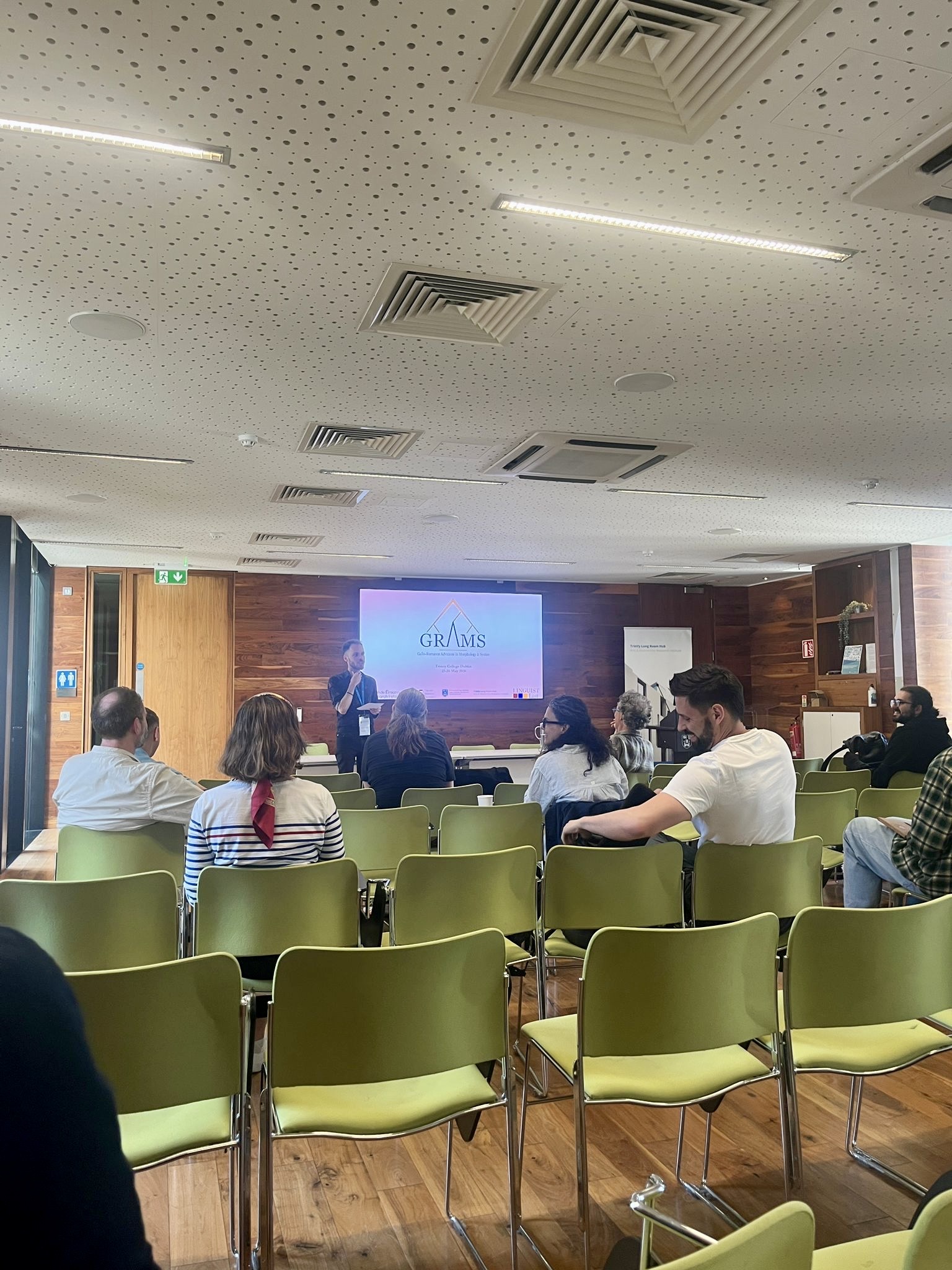
In 2026, I founded Gallo-Romance Advances in Morphology & Syntax (GRAMS), a two-day conference that acts as the flagship event for research on the morphology and syntax of the Gallo-Romance languages. GRAMS will return to TCD in 2027, after which it will become an itinerant event (please reach out if you would like to organise it).
Before joining TCD, I was a Lecturer in French Linguistics at the University of Oxford, where I served as Linguistics Organising Tutor at St John's College, St Catherine's College, and Pembroke College, and also acted as Lecturer at St Hugh's College. I previously taught at Queen's University Belfast and Ulster University, and before that I taught in secondary schools. I have a MSc and a PhD in Linguistics.
Profiles
Office
Room 3129
Department of Linguistics
Arts Building
Trinity College Dublin
Dublin, Ireland
Genealogy

News
-
July 2027
[event] I am co-organising a workshop with Afra Pujol i Campeny (Universitat de Girona) on Language fragmentation and endogenous change, as part of ICHL28 (26-30 July 2027, Reykjavík). You can consult our call for papers and submit an abstract by 01 December 2026.
-
May 2027
[event] GRAMS is coming back to Trinity College Dublin! Save the dates: 27-28 May. Our invited speakers are Richard Kayne, Jean-Yves Pollock, and Lena Baunaz. The call for papers opens on 19 October 2026 and closes on 11 January 2027.
-
Nov 2026
[talk] I am invited to give a talk at the SynSem seminar in Oxford, on 12 November. I will use this opportunity to present joint work with Raffaella Folli on implicit agents in Italian and French.
Research
My research investigates the formal properties of natural language, drawing on corpus linguistics, diachronic data, and cross-linguistic comparison. Past and current projects include:
Clitics
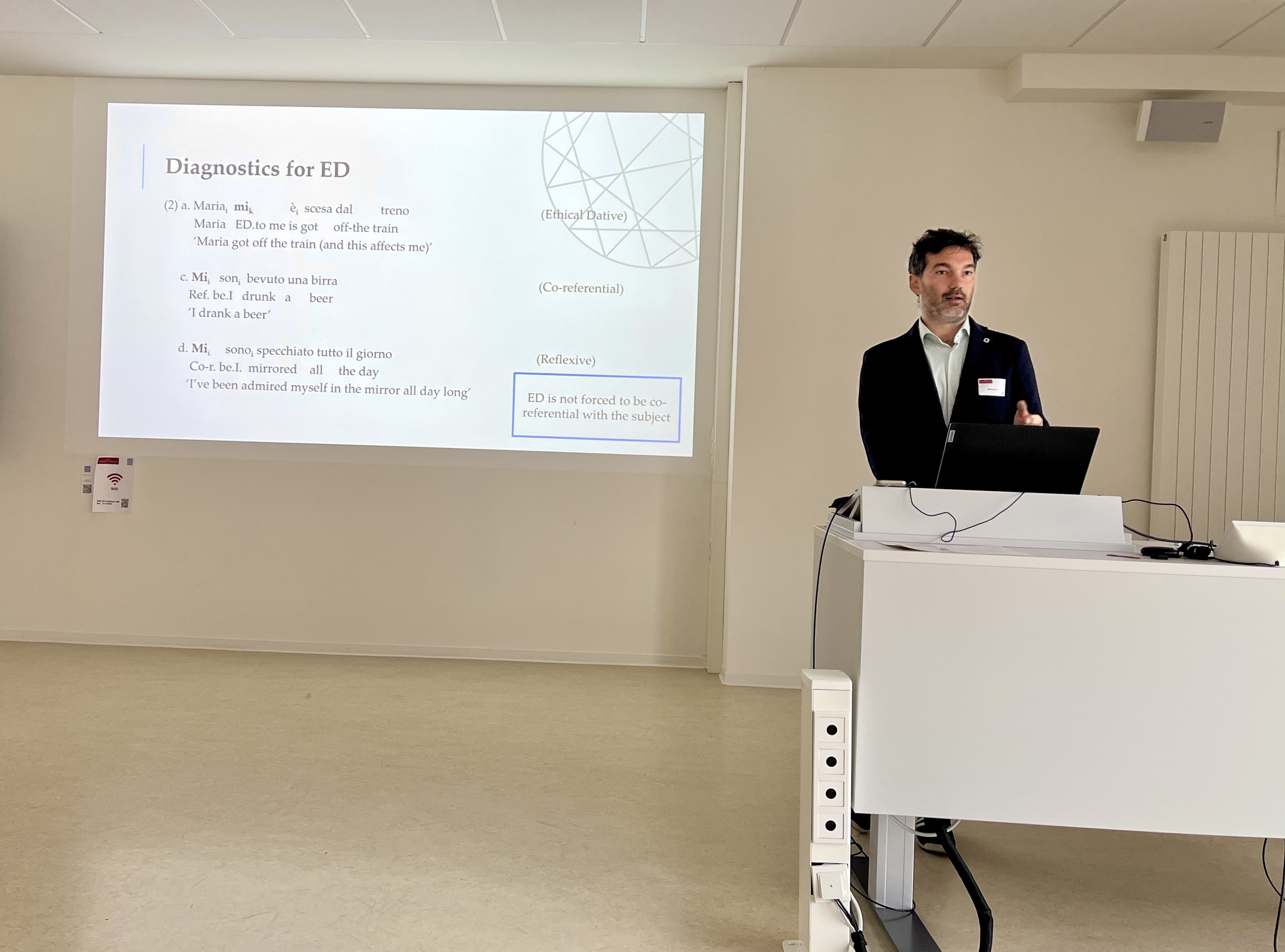
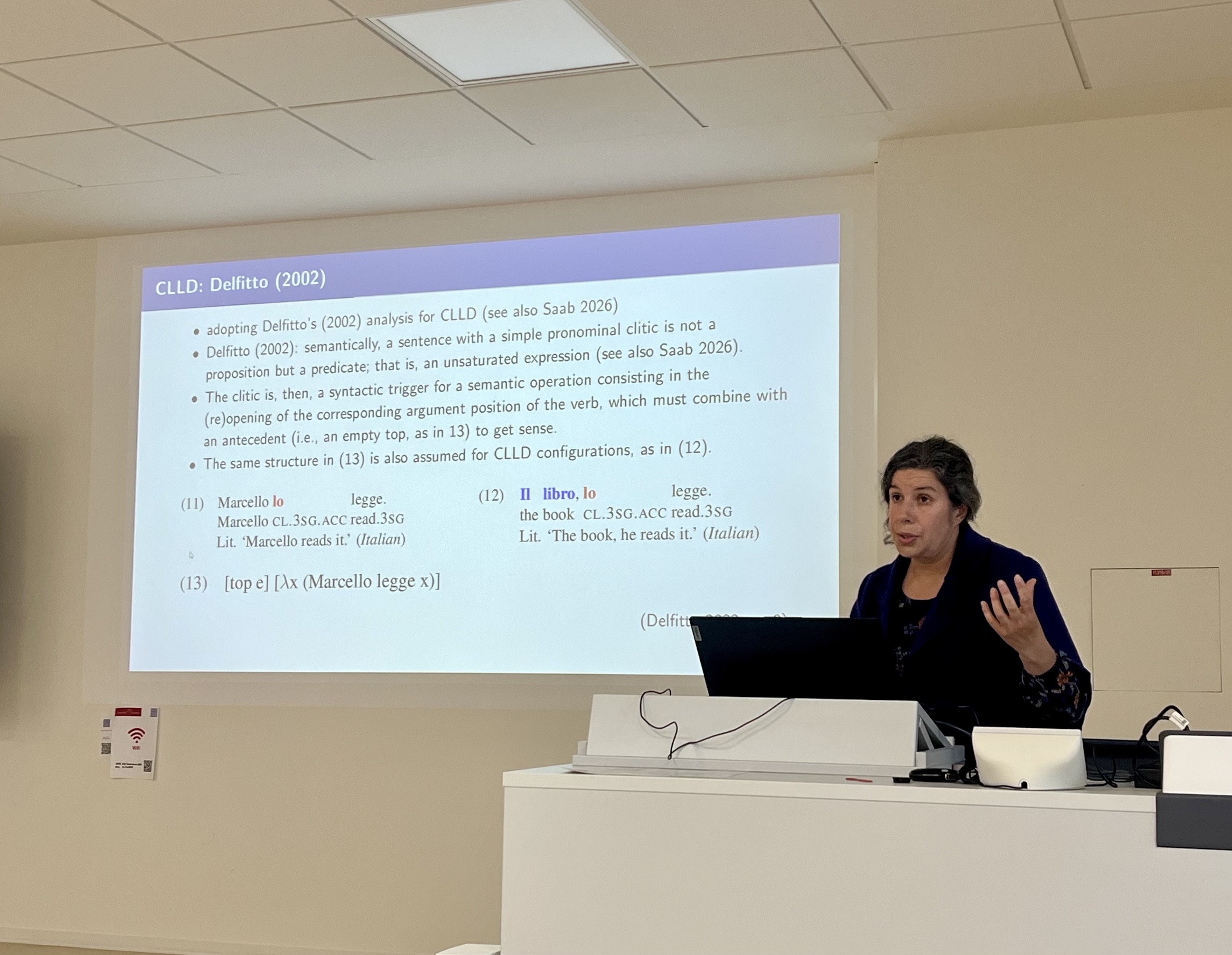
My work on clitic placement investigates the proclisis-enclisis alternation in finite and non-finite clauses (in the history of French, in other Romance languages, Greek, and Amazigh), and patterns of clitic climbing, reduplication, and interpolation. I am also interested in the nature of clitic doubling (mainly in Greek) and its consequences on theories of clitic placement.
Auxiliaries
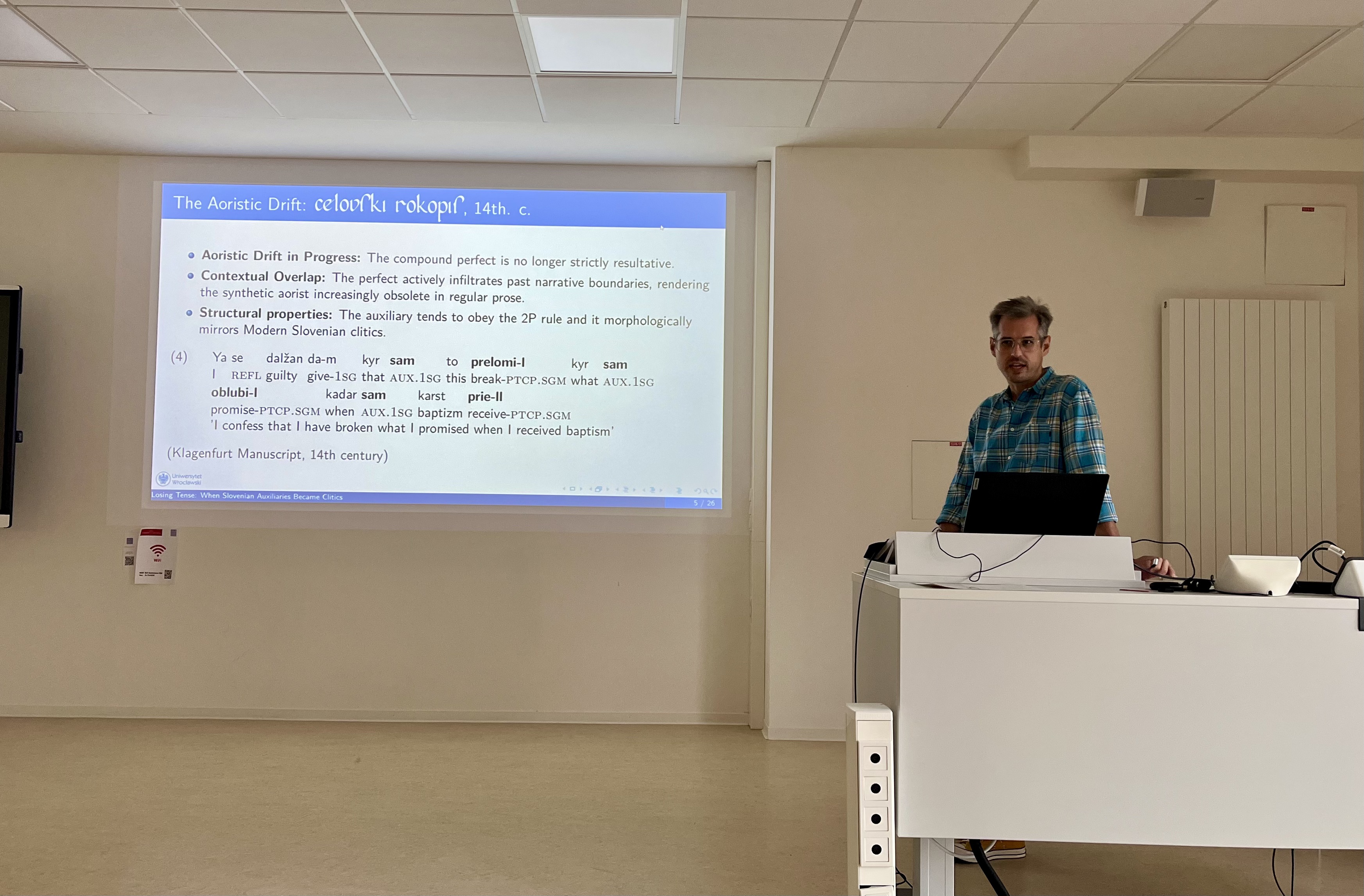
My Probus article offers a minimalist analysis of auxiliary selection in French, where I argue against the traditional hypothesis that argument structure 'decides'. In my NLLT paper, I apply my framework to auxiliary switch, with new data from the diachrony of French and in comparison with Italian and Sardinian.
Complementizers
I observed that some infinitival complementizers (a/de) are merged low in Old French, Old Italian, and Old Occitan. In work co-authored with Anna Paradís, we draw on pan-Romance data to argue that 'prepositional complementizers' can be either true P or true C. When they are the latter, we show that they can be merged in the following domains: CP, IP, or vP.
Restructuring
While my work argues against the existence of 'restructuring', it looks at clause size and long distance phenomena. My research focuses on clitic climbing, auxiliary switch, infinitival complementizers, and the 'know how to' construction. I also include cases of infinitive fronting of the type found in medieval Romance, and I follow the assumption that restructuring is monoclausal.
Agree
I defend the view that formal features can be specified with subfeatures (or rather, subvalues). My formal work on auxiliary selection proposes that Agree tracks indices of person features and questions the notion of argument identity.
Passives & Impersonals
This collaboration with Raffaella Folli questions the nature of si/se-constructions in Italian and in French. Our work addresses the difficulty of differentiating passives from impersonals, and we further demonstrate that it is an issue of the syntax-semantics interface.
Old French & Old Occitan
My work on these languages is quantitative and involves corpus linguistics. I document and quantify morphosyntactic constructions to analyse patterns of change and variation, within and between the two languages. My forthcoming book traces a millennium of French language history and offers formal analyses of clitic placement, word order in finite and non-finite clauses, and restructuring clauses.
Comparative Romance syntax
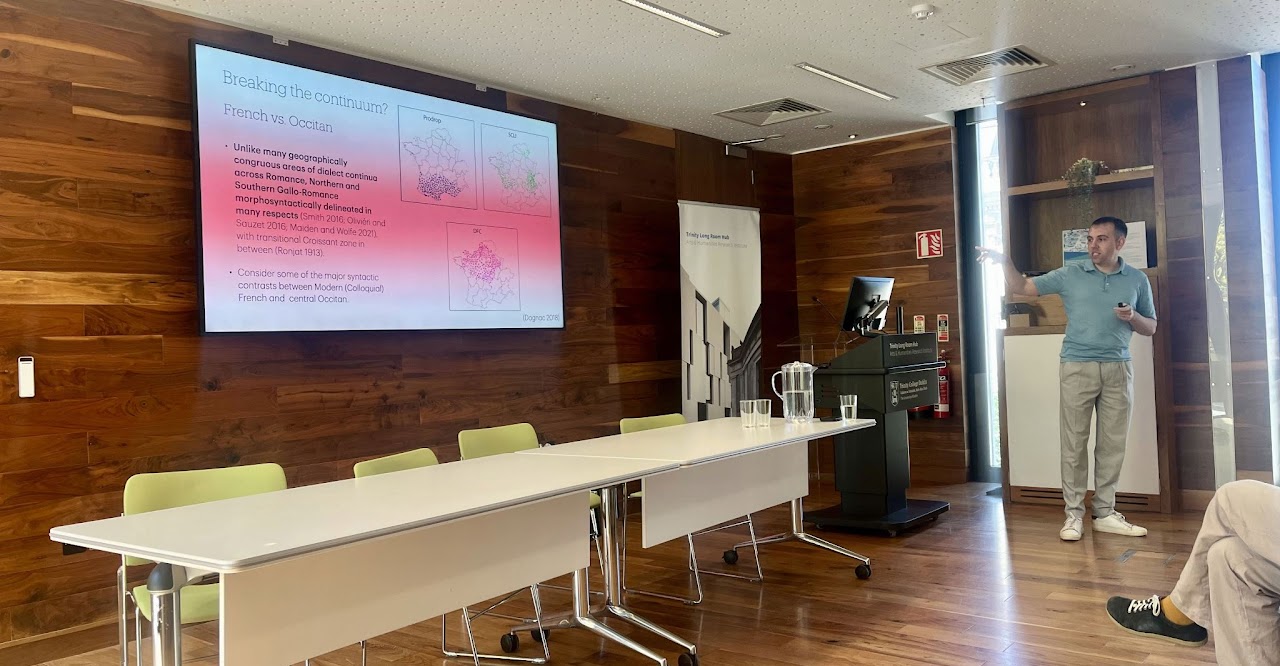
Much of my work documents and analyses the Romance language, with the systematic inclusion of minoritised varieties. One of the aims of my work is to understand the mechanisms behind the fragmentation of Latin into a multitude of languages. I have mostly worked on French, Occitan, Italian, and Catalan.
Greek
My forthcoming book compares clitic placement across Greek varieties (Standard, Pontic, Cypriot, Italiot, and Tsakonian), with the aim of capturing syntactic variation under a unified analysis. On Standard Modern Greek specifically, my collaboration with Christina Sevdali explores patterns of clitic doubling and reduplication, for they ask questions about long distance phenomena.